Digital Marketing for Hotels: How Hotels Attract, Convert, and Retain Guests Online
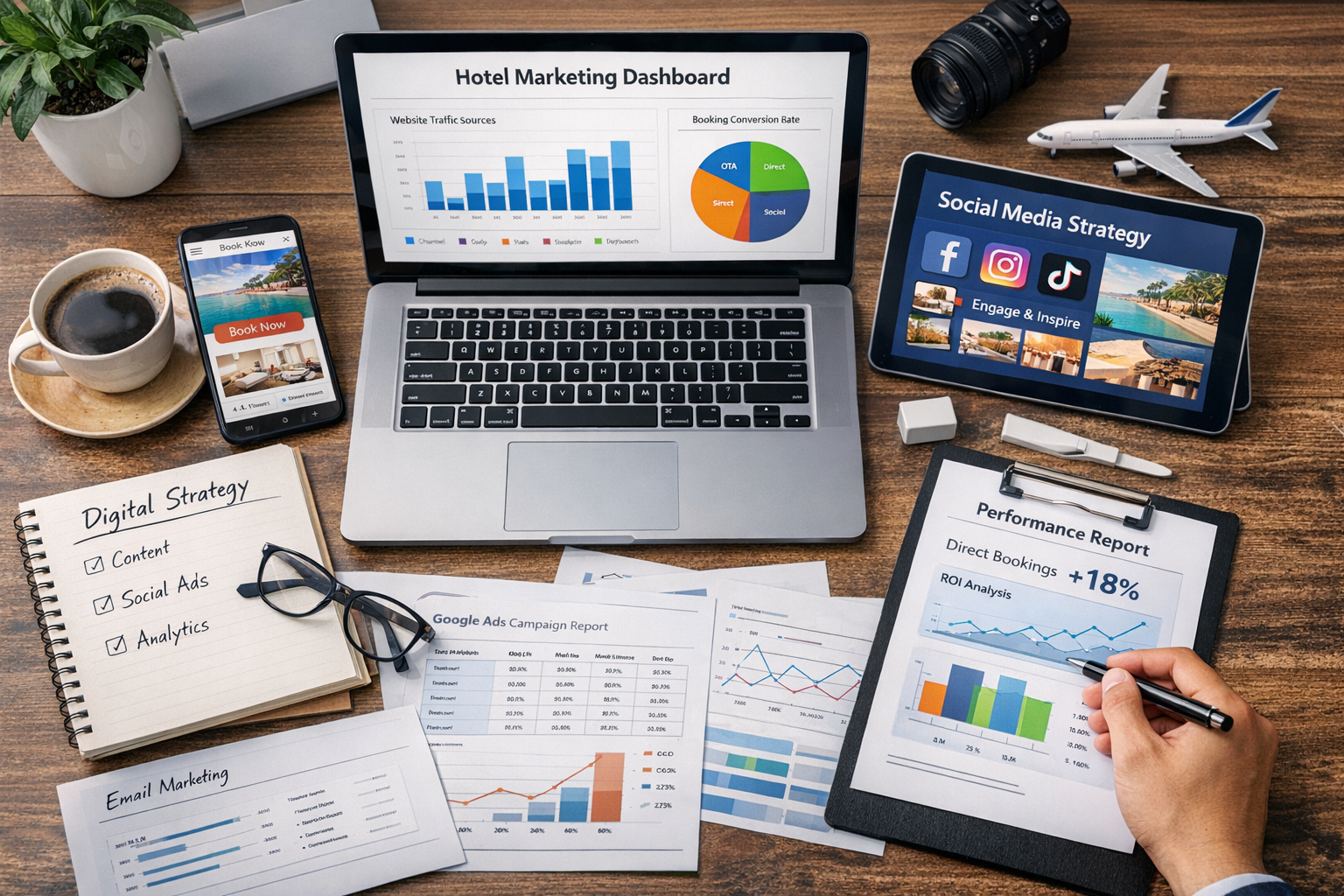
Digital marketing has become one of the most critical pillars of modern hospitality. As guest behavior shifts toward online research, mobile booking, and social media influence, hotels must compete not only with each other but also with OTAs, travel influencers, and global brands. Effective digital marketing is no longer optional — it is the engine that drives visibility, direct bookings, and long‑term guest loyalty.
This article explores the full digital ecosystem hotels must master: SEO, paid ads, social media, email automation, website optimization, and the connection between reputation and marketing performance.
1. Why Digital Marketing Matters in Hospitality
The guest journey has changed dramatically. Before booking a room, travelers:
- Search on Google
- Compare prices on OTAs
- Check reviews on TripAdvisor and Google
- Browse Instagram for inspiration
- Visit the hotel website
- Look for deals or loyalty benefits
Hotels that fail to appear in these touchpoints lose visibility, credibility, and revenue. Digital marketing ensures that the hotel is present, persuasive, and competitive at every stage.
2. The Hotel Digital Funnel
Hotels operate within a multi‑stage digital funnel:
A. Awareness
Guests discover the hotel through:
- Google search
- Social media
- Travel blogs
- OTAs
- Influencers
B. Consideration
Guests compare:
- Prices
- Reviews
- Photos
- Location
- Amenities
C. Conversion
Guests decide where to book:
- Direct website
- OTA
- Corporate portal
D. Loyalty
After the stay, hotels can:
- Encourage repeat bookings
- Upsell
- Build long‑term relationships
Digital marketing influences every stage — from discovery to loyalty.
3. SEO for Hotels: Ranking Higher on Google
Search Engine Optimization (SEO) is essential for driving free, organic traffic to the hotel website.
Key SEO strategies for hotels:
A. On‑Page Optimization
- Optimized room pages
- Clear descriptions
- Fast loading speed
- Mobile‑friendly design
- High‑quality images
B. Local SEO
Hotels must dominate local search results. This includes:
- Google Business Profile optimization
- Accurate NAP (Name, Address, Phone)
- Local keywords (“hotel in Stockholm city center”)
- Local backlinks
C. Technical SEO
- Schema markup for hotels
- Clean URL structure
- XML sitemaps
- HTTPS security
D. Content Strategy
Hotels should publish:
- Destination guides
- Event calendars
- Travel tips
- Blog posts
This builds authority and attracts organic traffic.
4. Paid Ads (SEM & Meta Ads)
Paid advertising helps hotels reach guests who are actively searching or browsing travel content.
A. Google Ads
- Search campaigns
- Google Hotel Ads
- Retargeting campaigns
B. Meta Ads (Facebook & Instagram)
- Visual storytelling
- Video ads
- Carousel ads
- Lookalike audiences
C. Retargeting
Targets users who visited the website but didn’t book. This is one of the highest‑ROI tactics in hospitality.
5. Social Media Strategy for Hotels
Social media is no longer just a branding tool — it is a booking engine.
A. Instagram
- High‑quality visuals
- Reels showcasing rooms, breakfast, spa
- UGC (User‑Generated Content)
- Influencer collaborations
B. TikTok
- Short, engaging videos
- Behind‑the‑scenes content
- Trend‑based storytelling
C. Facebook
- Retargeting
- Event promotion
- Local community engagement
D. YouTube
- Virtual tours
- Hotel walkthroughs
- Destination videos
Hotels that master social media build trust and emotional connection with guests.
6. Email Automation & Guest Journey
Email remains one of the most profitable channels for hotels.
A. Pre‑Arrival Emails
- Upselling (breakfast, spa, room upgrades)
- Arrival instructions
- Personalization
B. In‑Stay Emails
- Feedback requests
- Service promotions
- Local recommendations
C. Post‑Stay Emails
- Review requests
- Loyalty offers
- Re‑engagement campaigns
Automation ensures consistent communication without manual effort.
7. Website Optimization & Conversion Rate
The hotel website is the most important digital asset.
A. Speed & Performance
- Fast loading
- Mobile‑optimized
- Lightweight images
B. UX & Design
- Clear navigation
- Simple booking flow
- Strong CTAs (“Book Now”)
C. Booking Engine Optimization
- Transparent pricing
- Multiple payment options
- Promo codes
- Upsell modules
D. Trust Elements
- Reviews
- Awards
- Certifications
- Social proof
A well‑optimized website increases direct bookings and reduces OTA dependency.
8. How Reputation Affects Marketing Costs
Reputation and marketing are deeply connected.
High review scores lead to:
- Higher click‑through rates
- Lower cost‑per‑click
- Higher conversion rates
- Ability to charge higher prices
Poor reputation leads to:
- Higher advertising costs
- Lower conversion
- Need for discounts
- Lower demand
This is why reputation management and digital marketing must work together.
9. Essential Digital Marketing Tools for Hotels
- Google Analytics 4 – traffic & conversion tracking
- Google Ads Manager – paid search
- Meta Business Suite – social ads
- Mailchimp / HubSpot – email automation
- Revinate – CRM + email marketing
- Sojern – travel‑focused advertising
- Hotjar – website behavior analysis
These tools help hotels understand guests, optimize campaigns, and increase direct bookings.
10. Case Study: Increasing Direct Bookings by 18%
A boutique hotel in a competitive city market implemented:
- SEO improvements
- Google Hotel Ads
- Instagram Reels strategy
- Website redesign
- Automated email sequences
- Review improvement program
Results after 6 months:
- Direct bookings increased by 18%
- OTA dependency dropped
- Website conversion improved
- Marketing ROI increased significantly
Conclusion
Digital marketing is the backbone of modern hotel success. By mastering SEO, paid ads, social media, email automation, and website optimization – and by aligning these efforts with reputation and revenue management – hotels can attract more guests, convert more bookings, and build long‑term loyalty.
This is the digital transformation of hospitality in action.
Abdallah Salah Senousy, Lycksele