
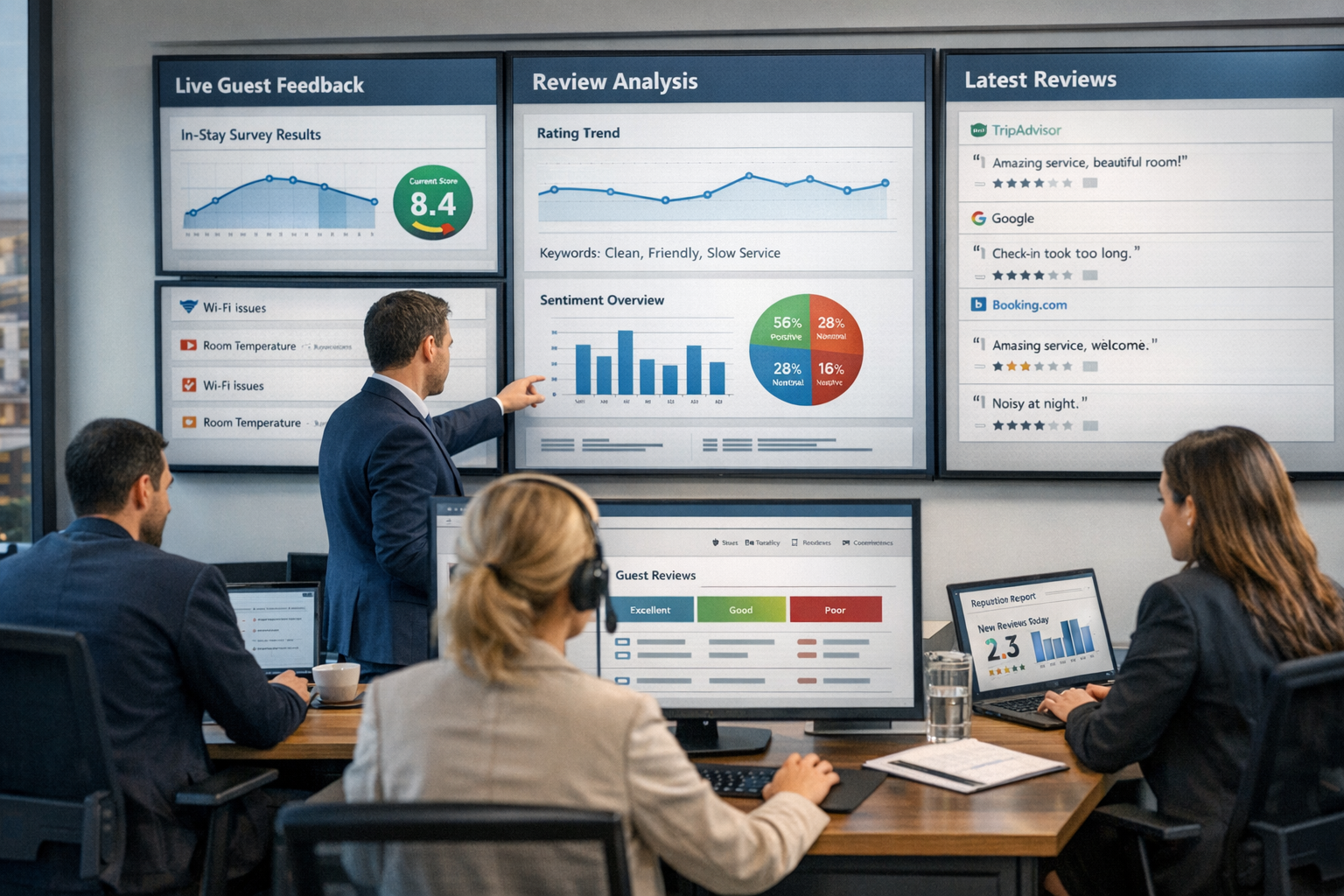
Complete Reputation Management Workflow for Modern Hotels
A structured, data-driven approach to managing digital reputation in contemporary hospitality.
Introduction
In today’s digital hospitality landscape, reputation management is no longer a reactive task handled only when problems arise. It has become a strategic, structured, and data-driven process that directly influences revenue, guest loyalty, and brand positioning. This article presents a complete end-to-end workflow for managing digital reputation in hotels, suitable for independent properties, boutique hotels, and international chains.
1. Pre-Stay Phase: Setting Expectations and Preventing Issues
The goal of the pre-stay phase is to reduce the risk of dissatisfaction by clarifying expectations and understanding guest needs before arrival.
Key actions
- Send a pre-arrival email that includes arrival information, hotel policies, and optional services or upsell offers.
- Activate guest profiling by recording preferences, reviewing previous stays, and flagging VIP or special-occasion guests.
Typical systems used: Property Management System (PMS), Customer Relationship Management (CRM) tools.
2. In-Stay Phase: Capturing Issues Before They Become Negative Reviews
The in-stay phase focuses on detecting and resolving problems while the guest is still on property.
Key actions
- Send a short in-stay survey after the first night, such as “How is your stay so far?”.
- Monitor operational pain points like internet connectivity, housekeeping response times, and front office interactions.
- Apply a service recovery protocol: respond immediately to issues, log them, and ensure follow-up by a manager.
Typical tools: guest feedback platforms, SMS or email automation, in-stay survey tools.
3. Post-Stay Phase: Turning Guests into Advocates
After check-out, the objective is to encourage satisfied guests to share positive reviews and to contain dissatisfaction privately.
Key actions
- Send a post-stay survey within 24–48 hours of departure.
- Segment guests based on feedback: invite promoters to leave public reviews and route detractors to management.
- Send a thank-you email and, where appropriate, offer a small incentive for a future stay.
Typical tools: survey platforms, email marketing tools, CRM.
4. Review Monitoring Phase: Daily Reputation Awareness
In this phase, the hotel monitors all public feedback across platforms to maintain a clear picture of its online reputation.
Key actions
- Check major review platforms daily, including Google, Booking.com, TripAdvisor, and Expedia.
- Create a daily or weekly reputation report summarizing review volume, average ratings, and key themes.
Typical tools: review aggregators, reputation management platforms, alert systems.
5. Response Management Phase: Professional and Consistent Communication
Responding to reviews is a core part of reputation management. The tone, speed, and content of responses all influence guest perception.
Guiding principles
- Respond to all negative reviews within 24–48 hours.
- Personalize each response and avoid defensive language.
- Acknowledge the issue, apologize when appropriate, and offer a path to resolution.
Sample response to a negative review:
“Thank you for sharing your feedback. We sincerely apologize for the inconvenience you experienced during your stay. Your comments have been shared with our management team, and we are taking immediate steps to address this issue. Please feel free to contact us directly at [email] so we can assist you personally.”
6. Analysis and Insights Phase: Turning Feedback into Data
Reputation management is not only about responding; it is also about learning from patterns in guest feedback.
Key actions
- Identify recurring complaints and recurring positive themes.
- Link feedback to specific departments such as Front Office, Housekeeping, Food & Beverage, and Maintenance.
- Compare performance with competitors where possible.
Typical tools: business intelligence dashboards and analytics modules in reputation platforms.
7. Improvement and Action Phase: Operational Change
Insights must lead to action. Otherwise, reputation management becomes a cosmetic exercise.
Key actions
- Update Standard Operating Procedures (SOPs) based on feedback.
- Design targeted training sessions for teams.
- Improve or redesign services that consistently receive low ratings.
- Launch guest experience initiatives that address identified gaps.
8. Crisis Reputation Management Phase: Handling High-Risk Situations
Sometimes, a single incident can escalate quickly online. Hotels need a clear crisis protocol to protect both guests and brand.
Typical crisis scenarios
- Viral social media complaints.
- Health or safety incidents.
- Discrimination or harassment allegations.
- Negative media coverage.
Suggested crisis steps
- Acknowledge the issue publicly in a calm and factual way.
- Avoid denial or blame; focus on responsibility and care.
- Move detailed discussion to private channels with the affected guest.
- Conduct an internal investigation and document actions taken.
- Share a follow-up statement once corrective measures are in place.
- Monitor online platforms closely for several weeks.
Conclusion
A structured reputation management workflow transforms online feedback from a threat into a strategic asset. By integrating pre-stay communication, in-stay detection, post-stay follow-up, systematic monitoring, professional responses, data analysis, and continuous improvement, hotels can build a resilient and trustworthy brand. In a market where every guest can publish their experience instantly, reputation is not accidental-it is designed, managed, and continuously refined.
Abdallah Salah Senousy Ahmed, Stockholm